What Is a Bahrain CR? (And Why It Matters for B2B)
Imagine closing a BD 15,000 consulting deal with a major Manama-based enterprise, only to have their procurement department freeze the contract because you cannot provide a valid 'CR copy'. A Bahrain CR (Commercial Registration) functions as the official state-issued identity card for your business, granting you the legal authority to operate, invoice, and hire within the Kingdom.
Entrepreneurs and foreign entities frequently hit a roadblock in opening a corporate bank account or onboarding as an approved vendor because they operate under personal names or foreign entities not registered locally. Understanding the exact mechanisms of the Bahrain CR system separates businesses that can legally secure lucrative B2B contracts from those that face blocked payments and regulatory penalties.
Without this registration, your business does not legally exist in the eyes of the Bahraini legal system. This means your contracts are unenforceable, your invoices cannot be processed by corporate finance departments, and your commercial activities violate Ministry of Industry and Commerce (MOIC) regulations.
What a Bahrain CR Actually Means for Your Business Operations
Holding a commercial registration moves your business from an informal arrangement to a recognized corporate entity capable of limiting liability and enforcing contracts.
The MOIC Legal Identity Framework
The Ministry of Industry and Commerce (MOIC) uses the CR system to assign a unique numerical identifier to your business. This number links every corporate action—from paying municipal taxes to registering intellectual property—to your specific legal entity. When a client signs a contract with your company, they are legally binding themselves to the legal person represented by that CR number, not to you as an individual. If you skip registration, you operate as an unlimited liability sole proprietor by default, exposing your personal assets to business lawsuits.
Distinguishing Active CRs from Inactive Status
A common failure mode is assuming that holding a CR number means you are legally allowed to trade. The MOIC issues registrations in two distinct phases: "CR Without License" (inactive) and "Active CR."
An inactive CR allows you to complete administrative setup tasks: signing a commercial lease, opening a corporate bank account, and applying for specific sector licenses. You cannot legally issue an invoice, import goods, or hire staff until you secure all necessary municipal and sector approvals to convert your status to an Active CR. Operating on an inactive registration results in immediate MOIC fines and potential suspension of your corporate bank accounts.
Sijili (Virtual CR) vs. Traditional Physical Registrations
For service-based professionals, deciding between a virtual and physical registration dictates your operational overhead and hiring capacity.
Sijili (Virtual CR):
- When it makes sense: For solo consultants, software developers, and creative professionals operating from home.
- When it does NOT make sense: If you need to import physical goods, require retail space, or plan to hire employees.
- Tradeoff: You save approximately BD 1,800+ annually by avoiding commercial lease requirements, but you permanently surrender the right to apply for LMRA work visas to hire expatriate staff. You can only hire Bahrainis or operate solo.
Traditional Physical CR:
- When it makes sense: For trading companies, agencies building a team, and retail operations.
- When it does NOT make sense: For early-stage solo founders testing a service concept with zero initial capital.
- Tradeoff: You gain full LMRA visa eligibility and import/export capabilities, but you must secure a municipality-approved commercial address before the MOIC will activate your license.

How the Sijilat System Processes Your Bahrain CR
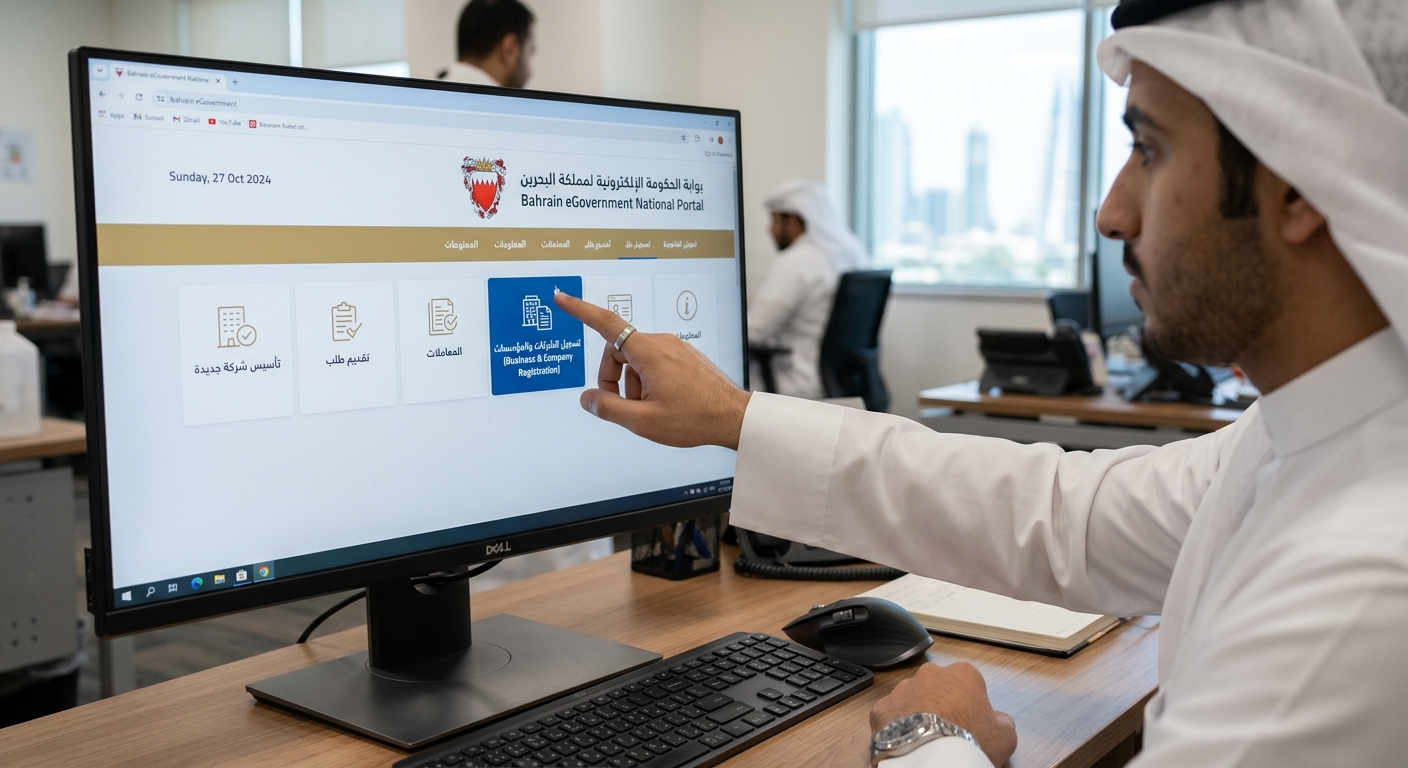
The Sijilat portal is the digital infrastructure that connects the MOIC with every other regulatory body in Bahrain. Understanding how this system routes your application prevents months of delays in launching your business.
Navigating the Ministry of Industry and Commerce (MOIC) Portal
Sijilat does not operate as a standalone database; it functions as a central clearinghouse. When you submit a new business activity, the system automatically tags the application with the required approvals based on the specific International Standard Industrial Classification (ISIC4) codes you select. Selecting "Management Consulting" routes your application solely through the MOIC, taking days. Selecting "Fintech Services" immediately triggers a secondary routing to the Central Bank of Bahrain (CBB), extending the timeline to months.
The Two-Step Approval: Commercial vs. Operational Status
Founders frequently stall because they misunderstand the sequence of approvals required to reach operational status.
- Commercial Registration (Step 1): You reserve a company name, define your corporate structure (e.g., W.L.L.), and submit shareholder details. This generates your CR number.
- Licensing (Step 2): You must upload a signed commercial lease and obtain sector-specific approvals (e.g., NHRA for healthcare, Information & eGovernment Authority for IT).
If you attempt to apply for operational licenses before finalizing your commercial registration structure, the Sijilat system will automatically reject the uploads.
Automatic Integration with LMRA and Municipalities
Your bahrain cr status is hardcoded into the systems of the Labour Market Regulatory Authority (LMRA) and local municipalities. If your local municipality flags your commercial address for zoning violations (e.g., opening a commercial kitchen in a purely residential block), Sijilat automatically suspends your active status. The moment your CR drops from "Active" to "Suspended," the LMRA system freezes your ability to issue or renew work permits for your staff.
Common Misconceptions About Holding a Bahrain CR
Misinterpreting Bahrain's commercial laws leads foreign investors to structure their companies poorly and local founders to face unexpected tax liabilities.
The '100% Bahraini Ownership Required' Myth for Foreign Investors
Many foreign vendors mistakenly believe they must surrender 51% of their equity to a local sponsor to operate in Bahrain. In practice, Bahrain permits 100% foreign ownership for the vast majority of B2B activities, including technology, consulting, manufacturing, and most trading sectors. You only need a local partner if you are entering specifically restricted sectors like real estate brokerage, certain types of construction, or customs clearance. Structuring a joint venture unnecessarily to bypass a non-existent restriction dilutes your equity and complicates your corporate governance.
Assuming a CR Automatically Grants LMRA Work Visas
A bahrain cr does not function as a blank check for hiring expatriate talent. The LMRA enforces strict Bahrainization requirements tied directly to your active registration.
- A standard new W.L.L. (With Limited Liability) starts with an expatriate visa quota of zero.
- To unlock expat visas, you must first hire and register a Bahraini employee with the Social Insurance Organization (GOSI).
- Assuming you can immediately relocate a foreign team to Manama upon securing your CR results in stranded employees and stalled operations.
The Dangerous 'Freelancers Are Exempt' Trap
Independent contractors often attempt to service local B2B clients using their personal bank accounts to avoid MOIC registration fees. This fails when your monthly consulting income exceeds standard retail banking thresholds. Receiving regular BD 2,000+ payments from corporate entities into a personal BenefitPay or standard checking account will trigger Anti-Money Laundering (AML) flags. The bank will freeze the funds and demand a commercial registration to release them.
Why Your Bahrain CR Dictates B2B Success and Compliance
Enterprise clients and financial institutions use your registration status as the primary filter to determine if you are a legitimate business or a compliance risk.
Unlocking Corporate Banking Facilities at BBK, NBB, or Ila
You cannot open a corporate bank account in Bahrain without an active CR and a completed Ultimate Beneficial Owner (UBO) declaration. Retail banks like NBB, BBK, and digital-first options like Ila Corporate require the MOIC extract to verify who exactly controls the funds. If you attempt to process B2B payments through a personal account, you force your enterprise clients to violate their own internal audit controls, which usually results in them terminating the vendor relationship.
Clearing Vendor Registration Hurdles for Bapco and Alba
Major industrial players like Bapco Energies and Alba utilize automated procurement portals that mandate a valid bahrain cr number during the first step of onboarding.
- The Mechanism: Their systems cross-reference your submitted CR number with the live MOIC database.
- The Failure Mode: If your CR is expired, or if your registered ISIC4 business activities do not match the services you are bidding for (e.g., bidding for an IT contract with a CR registered only for general trading), the tender board system will auto-reject your bid.
Mandatory NBR Registration at the BD 37,500 Revenue Threshold
The National Bureau for Revenue (NBR) tracks your commercial activity to enforce Value Added Tax (VAT) compliance. Once your annual taxable supplies exceed BD 37,500, VAT registration becomes mandatory by law. The NBR pulls data directly from corporate bank accounts and Sijilat. Operating without a CR to "hide" revenue from the NBR results in compounded penalties for both operating an unlicensed business and tax evasion.
Examples in Practice: The Bahrain CR in Action
Abstract regulations translate into specific operational hurdles when executing daily business tasks in the Kingdom.
A Solo Tech Consultant Securing a Sijili to Bill Local Agencies
A software developer securing a BD 2,500 monthly retainer with a Manama-based marketing agency cannot simply send a personal invoice. The agency's finance team requires a tax invoice linked to a registered entity. By applying for a Sijili (Virtual CR) under "Computer Programming Activities," the developer pays a BD 150 annual fee and secures a legal identity within 48 hours. This allows them to open a corporate account with Ila Bank, issue compliant invoices, and receive payments without triggering AML freezes on their personal accounts.
A Foreign B2B Supplier Establishing a W.L.L. Branch in Seef District
A Saudi-based industrial equipment supplier wants to directly service factories in Hidd. They cannot use their Saudi registration to clear goods through Bahrain Customs or hire local sales staff. They establish a 100% foreign-owned W.L.L. in Bahrain. Because they intend to import physical goods and hire a team, they bypass the Sijili option and lease a physical office in Seef District. Once the municipality approves the Seef address, the MOIC activates the CR, allowing the company to register with Bahrain Customs and apply for LMRA visas.
Resolving a Frozen CR Status Due to Missing Ultimate Beneficial Owner (UBO) Data
A local logistics company ignores the annual MOIC requirement to update their Ultimate Beneficial Owner (UBO) registry.
- The Consequence: The MOIC automatically changes their CR status to "Suspended" in Sijilat.
- The Ripple Effect: Within 30 days, their corporate bank account is frozen by their local bank due to compliance mandates. Their delivery trucks are unable to renew their vehicle registrations at the General Directorate of Traffic.
- The Fix: The company must log into Sijilat, declare their ownership percentages, pay the violation fee, and wait 24-48 hours for the systems to sync and unfreeze their operational capabilities.
Conclusion
A Bahrain CR represents far more than a bureaucratic checkbox; it is the fundamental infrastructure required to participate in the Kingdom's B2B ecosystem. Without it, you are locked out of corporate banking, enterprise procurement, and legal protection.
If you are a solo professional currently billing clients through personal accounts, your immediate next step is to evaluate your eligibility for a Sijili to protect your revenue streams from compliance freezes. If you are a foreign entity or a growing local business, establishing a standard W.L.L. and securing a municipality-approved commercial address is the necessary tradeoff to unlock hiring capabilities and large-scale enterprise contracts. Ensure your MOIC registrations, ISIC4 activities, and UBO declarations accurately reflect your actual operations to prevent automated suspensions that paralyze your cash flow.